
How can healthcare leaders improve staff wellbeing and organisational resilience in a busy hospital environment?
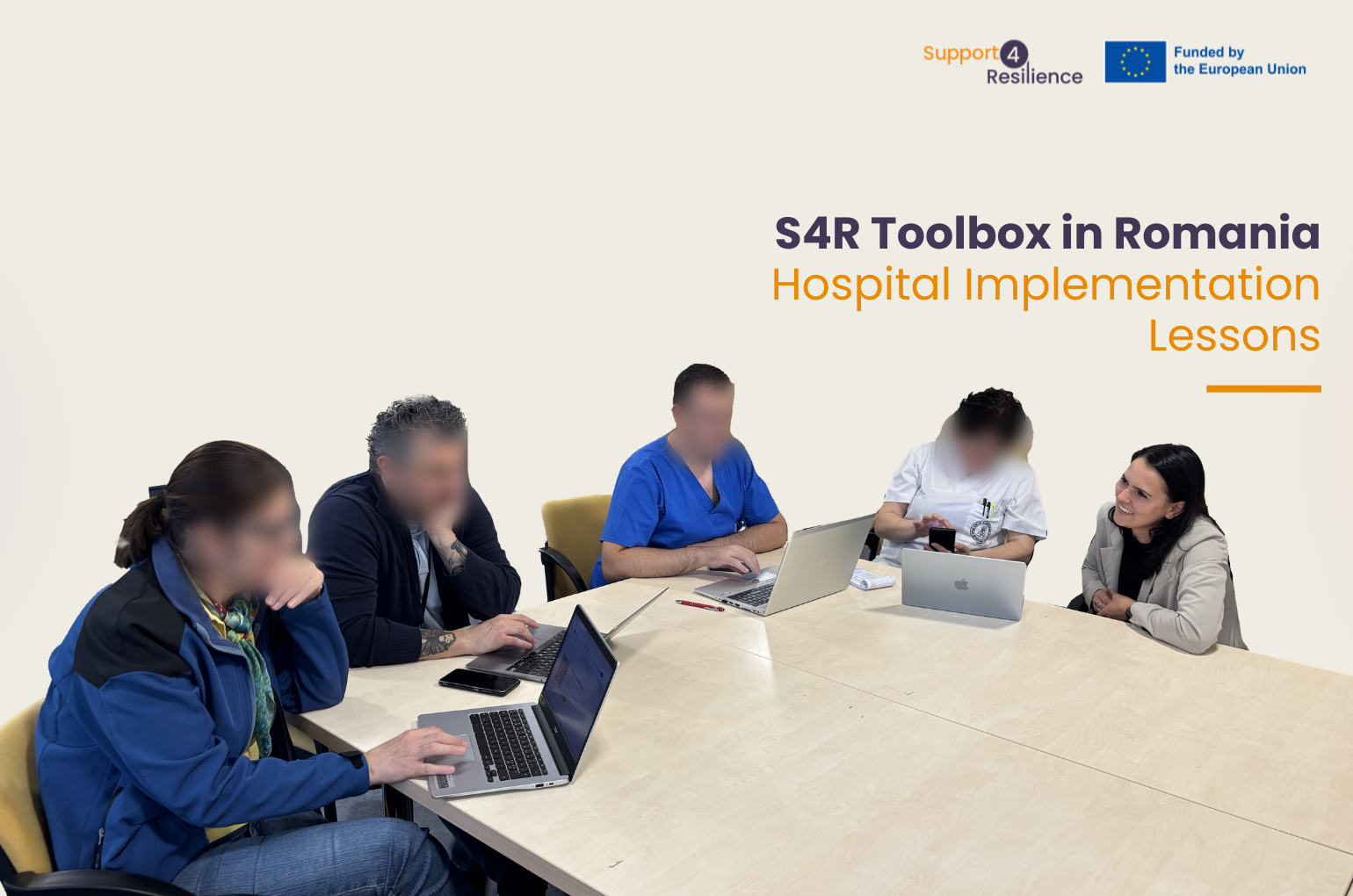
In Suceava, Romania, 12 healthcare leaders from seven hospital departments are putting the Support4Resilience (S4R) Toolbox into practice. Through a year-long intervention, they are exploring how digital tools, anonymous staff feedback and collaborative learning can support better working conditions and mental wellbeing.
Led by Ștefan cel Mare University of Suceava (USV), the intervention takes place in a public university hospital in North-Eastern Romania. It offers a practical opportunity to examine how the S4R Toolbox fits into everyday healthcare routines, the challenges hospital leaders face and the lessons emerging from its implementation.
Key takeaways
- Seven hospital departments are participating in the Romanian Support4Resilience intervention.
- Twelve healthcare leaders are involved in six Local Learning Collaborative meetings between April 2026 and April 2027.
- Leaders are using the S4R Toolbox to explore six dimensions: Learning, Autonomy, Relationships, Work-life Balance, Shared Understanding and Communication.
- Early implementation has highlighted practical challenges related to time, team dynamics, feedback collection and digital confidence.
- The next stages will examine Toolbox usability and acceptability, post-intervention assessments and the evidence needed to support conclusions and policy recommendations.
How is the S4R Toolbox being implemented in Romania?
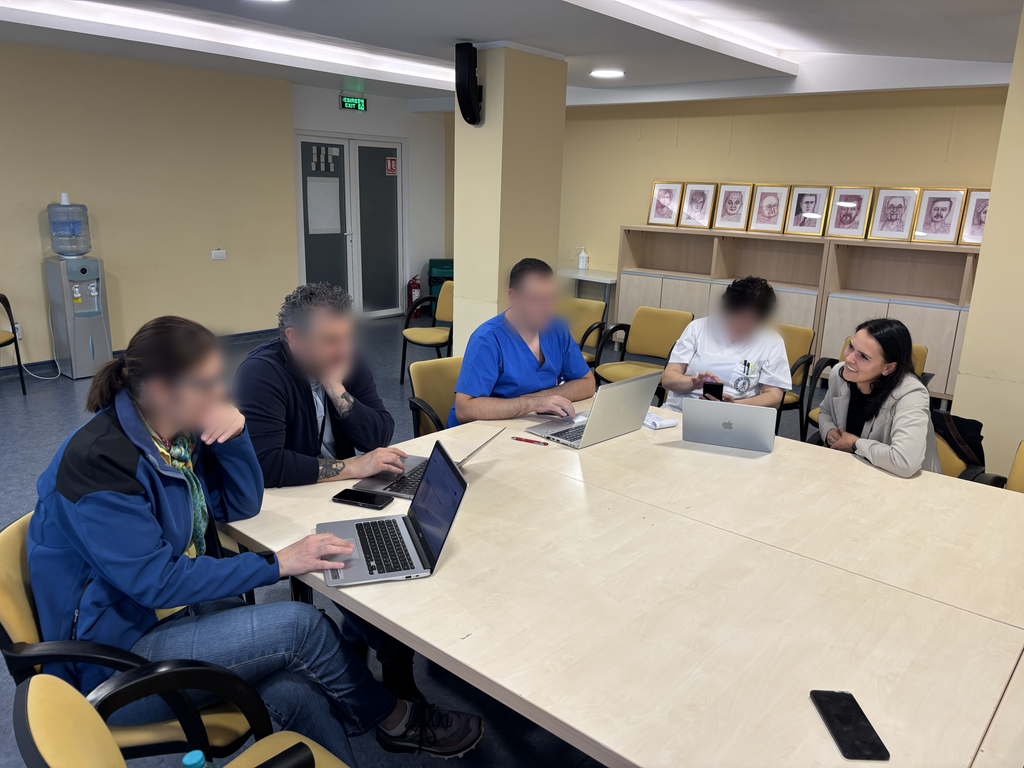
The Romanian intervention brings hospital leaders together through six Local Learning Collaborative (LLC) meetings, running from April 2026 to April 2027. The meetings are designed to help participants learn how to use the S4R Toolbox and reflect on how it can fit into their everyday work.
The sessions are led by two senior researchers from USV, acting as facilitator and observer. Because hospital leaders have demanding schedules, meetings can take place in small groups or individually. As of November 2026, three of the six planned Local Learning Collaborative meetings have taken place. The intervention continues to provide opportunities for healthcare leaders to share their experiences, reflect on the use of the S4R Toolbox and discuss the challenges of integrating its tools into everyday hospital routines.
Using the S4R Mapping Tool to assess working conditions
The first workshop introduced participants to the S4R platform and, in particular, to its first tool: Mapping.
Leaders first completed a baseline questionnaire covering six dimensions:
- Learning
- Autonomy
- Relationships
- Work-life Balance
- Shared Understanding
- Communication
They then learned how to distribute QR codes to colleagues and informal caregivers, usually accompanying family members, so that the same dimensions could be explored from different perspectives within each department.
How anonymous staff feedback supports workplace learning
During the second Local Learning Collaborative, researchers gathered feedback on the usability of the Mapping tool and on participants’ experience of collecting responses through the questionnaires.
Leaders learned how to visualise and interpret anonymous feedback, which prompted new questions and reflection points about their departments. Some participants initially felt less comfortable navigating the platform, but most considered it easy to use—an important factor given the limited time available to healthcare professionals during busy working days.
Participants were also introduced to AI-assisted personalised study modules. These can be incorporated into regular staff meetings to build on existing organisational strengths and identify research-driven opportunities to improve mentoring and workplace relationships.
For more on why trust and anonymity matter when collecting workplace feedback, see our article on workplace anonymity and trust in healthcare.
Four challenges of implementing digital tools in hospitals
Time constraints in hospital leadership
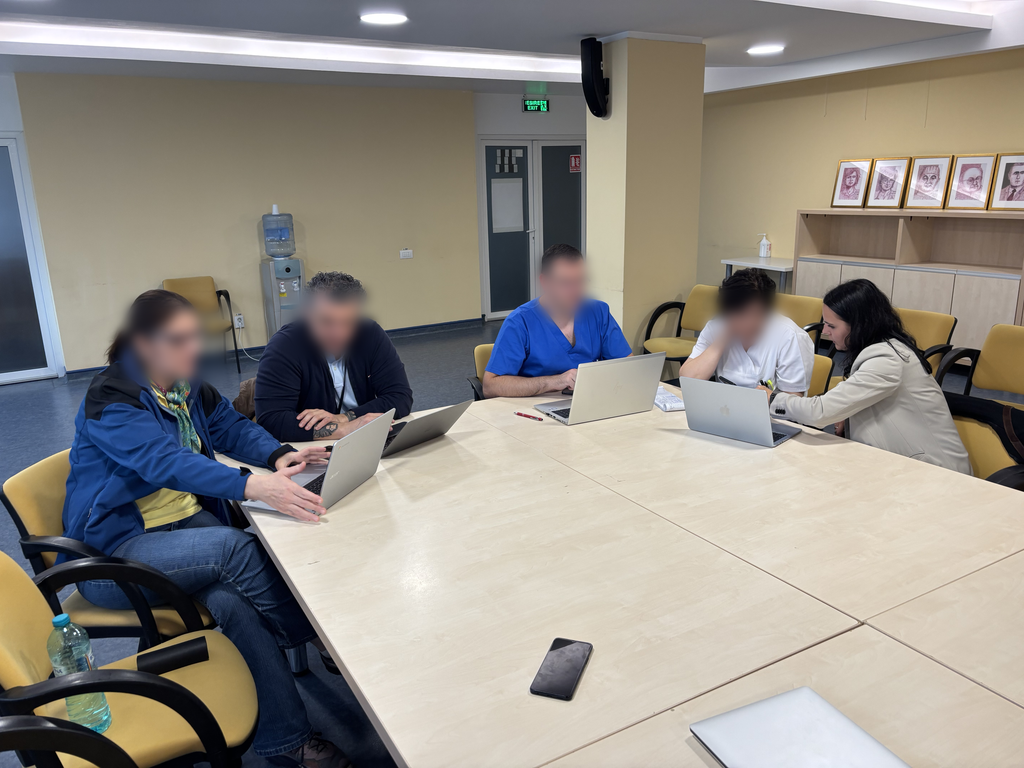
Hospital departments operate according to different routines, periods of high demand and procedural schedules. This has made it difficult to find common times for leaders to take part in the workshops together.
Even when time has been set aside, urgent calls and messages can interrupt participants and make it difficult to focus fully on the sessions. These experiences illustrate one of the practical challenges of introducing reflective activities into demanding clinical environments.
Professional hierarchies and team dynamics
The researchers have also observed differences depending on how groups are organised. Head doctors and head nurses from the same department often attend together, while mixed groups involving leaders from different departments may create different opportunities for exchange.
Workshop dynamics may also vary between same-role groups and joint participation by doctors and nurses, particularly within a hierarchy-based system in which professional roles influence interaction.
Engaging informal caregivers in workplace feedback
Participation by informal caregivers has varied considerably. Some leaders collected large amounts of feedback—one reported more than 80 responses—while others experienced difficulties related to confidentiality concerns that were not always clear to caregivers.
Digital literacy among healthcare leaders
Participants also show a wide range of technological competencies and preferences. Some leaders have felt less comfortable with software use or registration processes involving security codes sent by email, while others prefer accessing training materials by phone rather than laptop.
Importantly, none of these challenges has prevented the participating leaders from using the platform effectively.
Next steps for the S4R Toolbox implementation in Romania
The Romanian team expects the 12 participating leaders to continue through the remaining four intervention workshops. The next stages will provide a clearer picture of how leaders and their staff engage with the S4R Toolbox and whether its tools fit their day-to-day working routines.
At this stage, the researchers are deliberately cautious about drawing conclusions. Although participants have shown a positive attitude towards the Toolbox and the rapid completion of tasks, it is not yet known how quickly potential benefits may emerge or how easy it will be to incorporate new instruments into already demanding routines.
The final evaluation will examine Toolbox usability and acceptability, post-intervention assessments and the evidence needed to support conclusions and policy recommendations.
Lessons for healthcare leadership and organisational resilience
The Romanian case offers an opportunity to understand what happens when the Support4Resilience intervention moves from research and development into everyday hospital practice. The lessons emerging from Suceava—from time constraints and professional dynamics to digital confidence and anonymous feedback—will help the project understand how the Toolbox works in real healthcare settings.
These implementation experiences complement our wider work on leadership and resilience in elderly care and our overview of how the S4R Toolbox is moving into implementation.